Hunting and Fishing: Real Talk for Embroidery Designers
When I first opened the Hunting and Fishing file, I was trying to decide whether it belonged on a custom tote bag for a local outdoors shop or on a sweatshirt for a client who runs a fishing lodge. That is the kind of decision this design forces you to think through right away. It does not sit in a vague middle ground. It has a clear outdoor personality, a rugged mood, and a layout that asks you to consider placement, fabric, and stitch type before you ever load the embroidery file into your machine. As a designer who has tested hundreds of machine embroidery designs over the years, I can tell you this one rewards careful planning. It also demands a bit of honesty about what your machine can handle and what your customer actually expects.
First Impressions and Visual Mood
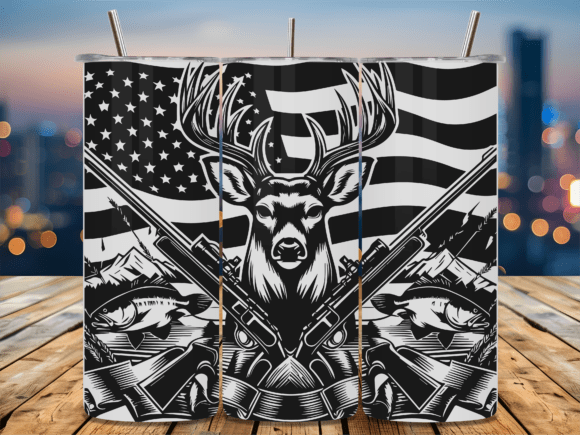
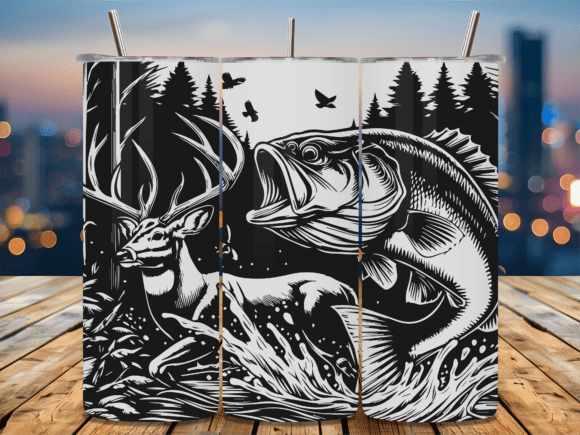
The Hunting and Fishing design carries a straightforward, masculine outdoor aesthetic that feels grounded rather than cartoonish. The composition leans into natural motifs without being overly busy. There is enough detail to give the artwork depth, but the linework stays clean enough that you can imagine it translating well onto a variety of surfaces. That matters when you are building a craft business around custom apparel or handmade products. A design that looks good on screen but turns muddy after stitching is a waste of time and materials. This one reads clearly in preview form, and that initial clarity gives me confidence that it will hold up in thread.
It fits naturally into the Graphics category because the file itself is built with precision. The laser wrap origin—intended for engraved tumblers—means the vector work is tight and the spacing is intentional. That same precision carries over when you treat it as an embroidery project. The edges are defined, the shapes are distinct, and there are no floating elements that will confuse the digitizing process. For anyone working in Crafts, especially those selling finished products on Etsy or at local markets, this kind of structural cleanliness saves hours of editing.
A Real Scenario: The Custom Sweatshirt Order
Let me walk you through a real situation. A repeat client asked me to create a sweatshirt embroidery for his father, who spends every season either hunting or fishing. The father does not wear flashy logos or oversized graphics. He wants something that looks like it belongs on a quality garment. I pulled up Hunting and Fishing and immediately thought about placement. On a crewneck sweatshirt, this design sits well as a left-chest piece or a subtle center back. The proportions are moderate enough that you do not need an oversized hoop, but the detail is rich enough that it does not feel skimpy. I decided on a left-chest placement with two thread colors: a dark forest green for the main outlines and a warm brown for accent elements. The result looked like a premium patch without actually sewing a patch. That is the kind of value that keeps customers coming back and referring your shop to others.
This scenario also tested how the design handles fabric texture. Sweatshirt fleece has a nap that can swallow fine details if the stitch density is too loose or the underlay is inadequate. I used a medium-weight cutaway stabilizer and a 75/11 sharp needle, and the design stitched out without any shifting or distortion. The fill stitch areas stayed crisp, and the satin stitch borders held their shape even around curved sections. If you are used to testing machine embroidery designs on stable fabrics, do not assume the same results on fleece. But in this case, the design adapted well.
How It Performs Across Different Products
I tested Hunting and Fishing on several substrates to get a full picture of its performance. On cotton twill tote bags, the design sat flat and the stitch coverage felt consistent. On a denim jacket, the contrast between the thread and the fabric gave the artwork a rugged, vintage look that would appeal to boutique shoppers. On a microfiber cleaning cloth, the running stitch outlines held up better than I expected, though I would recommend a heavier stabilizer for that application. For baby embroidery or delicate items, the design might feel a little heavy. The detail level suits adult apparel, outdoor gear, and home decor pieces like pillow covers or throw blankets much better than it suits infant onesies or soft cotton burp cloths.
For small shop owners who sell embroidered patches, this design is a strong candidate. The shapes are distinct enough that you can stitch it as a standalone patch and trim closely around the edges. It also works well as an applique design if you want to reduce stitch count and add fabric texture into the piece. I ran a test with cotton broadcloth as the applique base and a satin stitch edge, and the result had a dimensional look that feels premium in a retail display.
Where to Use This Design Carefully
No design is perfect for every situation, and Hunting and Fishing has a few areas that require attention. On small hoop sizes—anything under a 4x4 inch frame—the finer details start to crowd. If you are working with a compact hoop, consider sizing the design up slightly or simplifying the color palette. Trying to force too many small elements into a tight space will make the stitching look cluttered and reduce the clarity that makes the design appealing in the first place.
Stretchy fabrics like performance knit shirts or lightweight spandex blends can cause registration issues if you do not use the right stabilizer. I recommend a no-stretch cutaway stabilizer or a medium-weight tearaway with a temporary spray adhesive. Test a sample first. The fill stitch areas in this design are moderate in density, but if you run them on a fabric that shifts, the edges will drift. That matters for commercial embroidery where consistency across multiple units is critical.
Dark fabrics also demand careful thread color selection. The design relies on contrast between elements. If you stitch it entirely in one color on a black sweatshirt, you will lose the separation between motifs. I recommend at least two thread colors to maintain the visual hierarchy. Lighter fabrics like heather gray or khaki give you more flexibility and let the design breathe.
Visual Appeal and Product Value
From a buyer perspective, products featuring Hunting and Fishing look intentional. The design does not scream for attention. It sits quietly and lets the craftsmanship speak. That is exactly the kind of quality that builds trust with customers who buy personalized gifts and boutique merchandise. When someone receives a custom apparel item with clean stitching, balanced proportions, and thoughtful color choices, they perceive the whole product as higher value. That perception translates into positive reviews, repeat orders, and word-of-mouth referrals for your craft business.
For Etsy sellers, this design works well in both listing photos and the actual finished product. The clean lines photograph clearly, and the outdoor theme appeals to a specific but consistent audience. I have seen similar motifs sell steadily through the fall and winter months, especially around hunting season and holiday gifting. If you offer customization options like thread color changes or placement variations, you can create multiple product variations from a single embroidery file. That is efficient inventory management without sacrificing variety.
Practical Notes for Embroidery Designers
Here are a few things I recommend before you use Hunting and Fishing in a paid project or for your own handmade product line:
- Test on scrap fabric first. Even if the preview looks perfect, stitch out a sample on the exact fabric you plan to use. Check for pull, push, and any distortion in the satin stitch borders.
- Review thread color contrast. Print a black and white mockup of the design to see if the elements separate clearly without relying on color. If they blend together in grayscale, adjust your thread palette.
- Check stitch density. If you notice areas where fill stitches pile up, reduce the density slightly or switch to a lighter underlay. Dense stitching can cause puckering on thin fabric.
- Confirm hoop size. Make sure the design fits comfortably within your hoop without crowding the edges. Leave at least half an inch of clearance around the design for stabilizer movement.
- Test on curved surfaces. If you plan to stitch this on a cap or a curved bag panel, run a test on a curved mockup. Flat tests do not always translate to curved results.
- Check licensing terms. Before you sell finished products or digital embroidery files based on this design, confirm whether the license allows commercial use. Some graphics files have restrictions that affect resale or production volume.
- Use proper stabilizer. For most applications, a medium-weight cutaway stabilizer gives the best balance of stability and softness. For delicate fabrics, switch to a lightweight tearaway and test first.
- Inspect small details. Look at the narrowest points in the design. If any lines are thinner than 0.5mm in the vector file, they may not stitch cleanly at smaller sizes. Enlarge the design slightly if needed.
Final Thoughts on Using This Design in Your Work
Hunting and Fishing is not a flashy, trend-driven design that will feel dated in six months. It is a solid outdoor motif with enough detail to look premium and enough restraint to work across multiple product categories. Whether you are stitching it onto a custom tote bag, a sweatshirt for a lodge client, a set of embroidered patches for a craft fair, or a personalized gift for a holiday order, the design holds up under real working conditions. It respects your time by stitching cleanly, and it respects your customer by looking like something they would actually wear or display.
If you run a small shop, sell on Etsy, or produce handmade products for a local market, this is the kind of design asset that earns its place in your library. It is versatile enough for commercial embroidery runs and personal enough for one-off gifts. Just take the time to test it on your specific setup, choose your thread colors with intention, and match the stabilizer to the fabric. Do those things, and Hunting and Fishing will deliver the kind of finished product that keeps your reputation solid and your customers happy.